HomeBlogTechnologyWhy Businesses Lose Money Due to Poor Demand Planning
Why Businesses Lose Money Due to Poor Demand Planning
Introduction
Every business wants to boost sales while keeping inventory costs low. However, finding this balance is often challenging.
Many companies invest heavily in marketing, acquiring customers, and logistics but ignore one of the biggest profit drivers—demand planning.
When businesses struggle to predict customer demand accurately, the results can be serious. Poor demand planning can cause stockouts, excess inventory, higher storage costs, wasted working capital, delayed deliveries, and ultimately, lost customers.
As supply chains grow more complex and customer expectations rise, businesses cannot rely on guesswork or spreadsheets for inventory decisions.
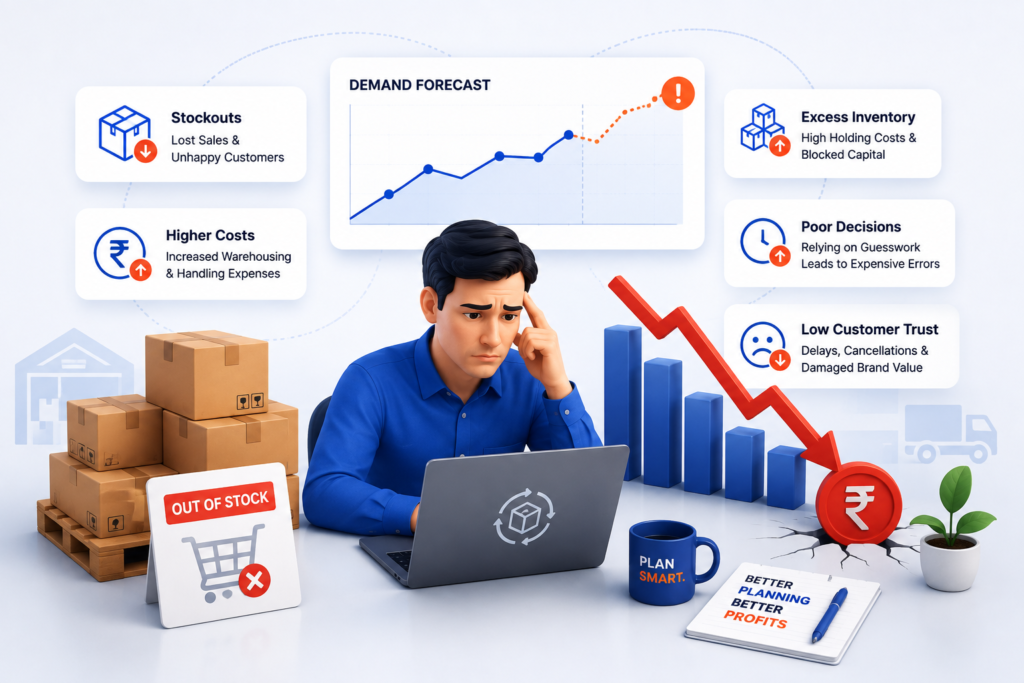
This is where AI-driven demand planning solutions like DAAKit Plan IQ can help businesses forecast demand more accurately, optimize inventory, and improve profits.
What Is Demand Planning?
Demand planning is the process of predicting future customer demand so businesses can stock the right products, in the right amounts, at the right locations, and at the right time. Effective demand planning takes several factors into account, including:
• Historical sales data
• Seasonal trends
• Promotional campaigns
• Regional buying patterns
• Market demand
• Product lifecycle
• Inventory availability
• Business growth projection
The Hidden Cost of Poor Demand Planning
Lost Sales Due to Stockouts
Imagine launching a successful marketing campaign only to find your best-selling products are out of stock. Customers rarely wait for products to become available again. Instead, they turn to competitors.
Every stockout leads to:
• Lost revenue
• Lower customer satisfaction
• Fewer repeat purchases
• Damage to brand reputation
Excess Inventory Blocks Working Capital
Some businesses try to prevent stockouts by ordering more inventory than they need. Unfortunately, overstocking creates its own set of problems.
Excess inventory means:
• Capital is tied up in unsold products
• Warehousing costs rise
• Insurance and handling expenses increase
• The risk of product obsolescence grows
• Cash flow decreases
Higher Warehousing Costs
Inventory sitting in warehouses costs money every day.
Poor demand planning often results in:
• Overcrowded warehouses
• Additional storage facilities
• Higher labor costs
• Increased inventory handling
Inaccurate Purchasing Decisions
Without accurate demand forecasting, procurement teams often rely on assumptions.
This leads to:
• Emergency purchasing
• Supplier rush orders
• Higher procurement costs
• Delayed replenishment
Poor Customer Experience
Customers expect products to be available whenever they place an order. When businesses frequently face stockouts, delayed shipments, or order cancellations, customer trust declines.
A poor buying experience often results in:
• Negative reviews
• Reduced loyalty
• Higher customer acquisition costs
• Lower customer lifetime value
Why Traditional Demand Planning No Longer Works
Many businesses still manage inventory using spreadsheets or simple historical sales reports.
While these methods may have worked in the past, they struggle to keep up with today’s fast-changing ecommerce landscape.
Traditional demand planning often fails because it cannot quickly respond to sudden demand spikes, regional buying behavior, flash sales, seasonal changes, marketing campaigns, new product launches, and inventory spread across multiple warehouses
How AI Improves Demand Planning
AI-driven demand planning helps businesses:
• Predict future demand more accurately
• Identify fast-selling products
• Detect slow-moving inventory
• Suggest replenishment timing
• Optimize stock allocation
• Lower forecasting errors
How DAAKit Plan IQ Solves Demand Planning Challenges
Key capabilities include:
• AI Demand Forecasting
• Inventory Optimization
• Multi-Warehouse Visibility
• Smart Replenishment Planning
• Actionable Insights
Benefits of Better Demand Planning
Businesses generally see:
• Fewer stockouts
• Lower inventory costs
• Improved cash flow
• Better inventory turnover
• Faster order fulfillment
• Higher customer satisfaction
• Increased profitability
Why Demand Planning Will Define Competitive Advantage
Businesses that invest in AI-driven demand planning can scale efficiently, improve operational performance, reduce inventory risks, and deliver better customer experiences.
Conclusion
Poor demand planning quietly reduces profitability through stockouts, excess inventory, rising warehousing costs, and inefficient purchasing.
DAAKit Plan IQ helps businesses forecast demand accurately, optimize inventory, cut operational costs, and boost customer satisfaction.
Frequently Asked Questions (FAQ's)
Demand planning is the process of forecasting future customer demand.
It leads to stockouts, overstocking, higher warehousing costs, and lost sales.
AI analyzes historical sales, seasonal trends, regional demand, and business data for accurate forecasts.
An AI-driven inventory planning and demand forecasting platform.
D2C brands, ecommerce businesses, retailers, FMCG companies, quick commerce platforms, and organizations managing inventory